Seventy-Two Tiny Seasons: A Sketchbook Challenge Rooted in Japan's Oldest Calendar
A Calendar Written in Weather
Somewhere around 1,300 years ago, Japanese court astronomers took the Chinese solar calendar and sliced it into increasingly fine pieces. The year became 24 solar terms. Then each of those got divided again, until the whole year was described in 72 microseasons — each one lasting roughly five days.
These weren't dates. They were feelings with names: East Wind Melts the Ice. Hibernating Insects Surface. Frogs Begin to Sing. Cold Winds Arrive, Leaves Fall.
Reading through the list, you can almost smell the year. And for an artist, that's the hook. Each microseason is a five-day prompt, arriving on schedule, whether you feel inspired or not.
The Problem — and the Fun — of Borrowing It
Here's the catch: those names were written for Kyoto and Nara. If you live in Minnesota, 'east wind melts the ice' might land in late March, not early February. If you're in Southern California, 'mist and dew settle' may never happen at all.
That's not a bug. It's the assignment.
The real practice isn't copying the Japanese calendar — it's translating it. You take the poetic structure and rebuild it with your own eyes, in your own zip code. What melts first in your town? What insect surfaces in your garage in late February? When do your frogs start singing? (If you're in Georgia, earlier than you'd think.)
How the Challenge Works
The rules are deliberately simple:
- Find the dates. Search for a list of the 72 Japanese microseasons with their approximate solar-calendar dates. They run from early February through late January of the following year.
- Commit to small. Each piece should fit in a palm-sized sketchbook — postcard size or smaller. Five days is short. Small work gets finished.
- One observation per season. Not a landscape. Not a masterpiece. A single thing you actually noticed: the way frost crept across your windshield, the first dandelion cracking the sidewalk, the exact gray of a February sky over the interstate.
- Date and name it. Write the microseason's name and your dates at the bottom, Japanese original if you like, plus one line about what you saw.
By the end of a year you'll have 72 tiny drawings and something better than a portfolio piece: a record of paying attention.
Adapting the Names to American Weather
Half the joy is renaming. A few translations our studio has played with for a US Midwest calendar:
- East Wind Melts the Ice becomes Pothole Season Opens
- Frogs Begin to Sing becomes Peepers at the retention pond
- Mist and Dew Settle becomes Humidity you can chew
- Cold Winds Arrive, Leaves Fall becomes First snowplow heard before dawn
If your climate makes a season meaningless, swap it for the thing that does happen in that window — monsoon season in Arizona, fireflies in Tennessee, allergy season everywhere. Your calendar becomes a portrait of where you actually live.
What Micro-Observation Does to Your Art
Working this small and this frequently changes how you draw. A few things I noticed over a full year of the practice:
You stop inventing weather. When you only draw what you saw this week, your skies get specific. That particular slate-blue before sleet? You can't fake it, and you stop trying.
Your color memory sharpens. Five days is not enough time to look things up later. You learn to mix that shade now, and your palette instincts quietly level up.
You build an unbreakable habit. Seventy-two deadlines a year sounds terrifying until you realize each piece takes twenty minutes. Momentum beats motivation, every time.
You collect a vocabulary of small things. A year in, your sketchbook holds acorns, storm drains, neighbor's dogs, seed pods, icicles shaped like teeth. This becomes raw material for every bigger work you make afterward.
Starting Mid-Year (Because You Will)
Nobody starts this calendar in early February. Pick whichever microseason you're in right now and begin there. The list wraps around; you'll fill the gap next year.
A few practical tips:
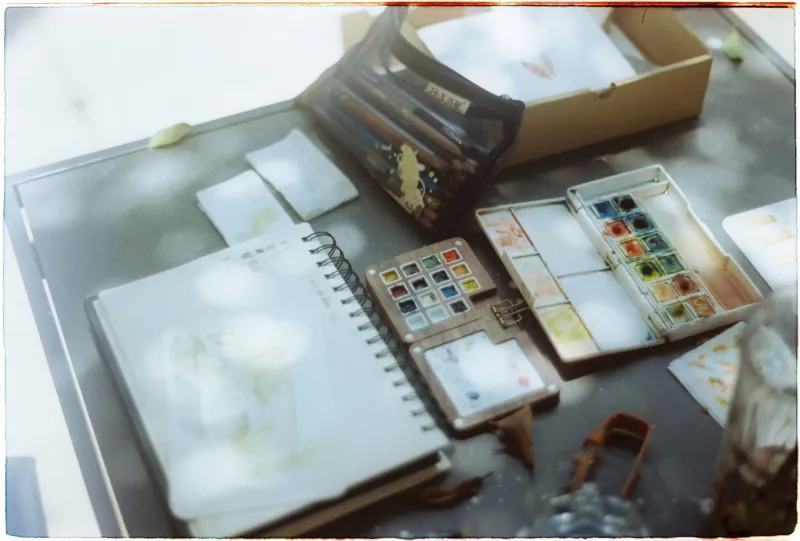
- Use whatever medium takes the least setup. Watercolor travel kits, a single brush pen, colored pencils in a zip pouch.
- Keep the sketchbook somewhere you pass daily — kitchen counter, entryway table, car glovebox.
- Miss a season? Note it and move on. A calendar with gaps is still a calendar.
There's a quiet idea running through Japanese art tradition that attention itself is a form of respect — that naming a small thing, like the moment ice gives way or a frog first speaks, is a way of honoring it. The 72 microseasons are that idea made into a calendar.
You don't need to be Japanese, or in Japan, to use it. You just need a small book, five days at a time, and a willingness to notice what your own corner of the world is doing. Start with the season you're standing in.