One Corner Booth, Thirty-Six Moods: A Repeat-Sketch Project for Your Local Café
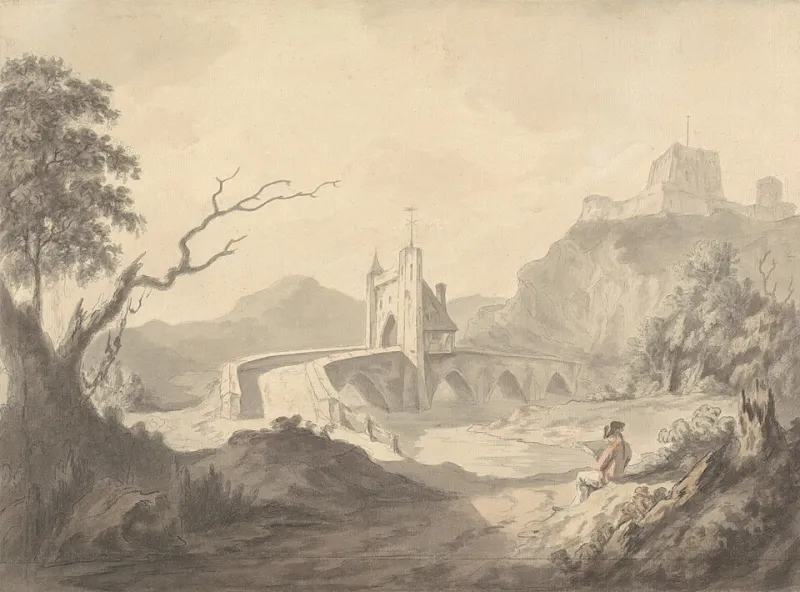
Photo: Samuel Davis, CC0, via Wikimedia Commons
There is a diner near my house with a cracked vinyl booth, a pie case that hums, and a window that turns into a mirror after sunset. I have drawn it more times than I can count, and I am still not bored. That is the strange gift of picking one ordinary place and returning to it on purpose.
Hokusai built an entire famous series around a similar idea. His Thirty-Six Views of Mount Fuji, made in the early 1830s, is not thirty-six postcards of the same mountain. It is one landmark seen through weather, distance, work, travelers, and mood. The Great Wave is in there. So is Red Fuji. But so are rooftops, bridges, barrels, and people going about their day. Mount Fuji is the anchor, not the whole story.
That is the model I want to borrow for urban sketching. Not the mountain. The return visit.
Why One Ordinary Place Beats a Scenic Overlook
Most sketching challenges push you toward new locations. New streets, new architecture, new views. That can be fun, but it can also train you to chase novelty instead of attention. You show up, make one drawing, and leave before you have really seen anything.
A repeat project flips that. You choose a place you can reach without heroic effort: the coffee shop on your commute, the corner store with the hand-painted sign, the diner where the same three regulars sit at the counter. Then you go back. Again and again. The subject stays put. Your seeing has to do the changing.
This is especially useful for illustrators in the US, where we often tell ourselves we need a dramatic canyon or a historic downtown to make a sketchbook interesting. We do not. A café with bad fluorescent lighting and a good window can carry thirty-six drawings if you pay attention.
The Project, Stripped Down
The rules are simple. Pick one location. Make thirty-six sketches of it. One sketch per visit. Keep each session short enough that you will actually do it, somewhere between ten and forty minutes. A page in a sketchbook is enough. A napkin is enough if that is what you have.
Thirty-six visits sounds like a lot until you spread it out. You could go three times a week for twelve weeks. You could go once a week for nine months. You could do a few weekday mornings, a few Saturday afternoons, and a couple of late evenings when the place has a completely different personality. The schedule should fit your life, not the other way around.
Do not wait for the perfect week to begin. Start with the next cup of coffee you were going to buy anyway.
Thirty-Six Is a Structure, Not a Sentence
Hokusai's number gives the project a shape. It says: this is a series, not a one-off. It also creates a built-in deadline that is far enough away to be forgiving.
But do not turn the count into a punishment. If you miss a week, you have not failed. If you get to sketch nineteen and realize you have been drawing the same angle from the same seat, that is useful information. Adjust. Move to the other side of the room. Draw the reflection in the window instead of the room itself. Draw only the hands of the people waiting for their orders.
The number is there to keep you returning. It is not there to make you miserable.
What to Vary When the Subject Stays Put
A repeat project only works if you change something besides the date. Here are variables worth playing with:
- Time of day. Morning light, lunch rush, the dead hour at 3 p.m., closing time. The same room can feel like three different buildings.
- Weather. Rain on the window, gray November light, hard summer sun, the strange yellow glow before a storm.
- Viewpoint. Sit by the door. Sit at the counter. Stand outside and look in. Draw from across the street.
- Duration. One drawing in five minutes. One in thirty. One in an hour if the staff does not mind you lingering.
- Medium. Pencil, brush pen, watercolor, colored pencil, a single gray marker. Each one forces different decisions.
- Focus. One visit is about architecture. One is about people. One is about shadows. One is about the objects on the counter.
- Mood. Draw the place when it feels busy and loud. Draw it when it feels lonely. Draw it when you are impatient.
You do not need to plan all thirty-six variations in advance. Pick the next variable that feels slightly uncomfortable, then go sketch it.
Make the Sketchbook Do the Remembering
A repeat project can blur together if you do not leave yourself notes. At the top of each page, write the date, the time, the weather, and where you sat. Add one line about what the place sounded like or what you ordered. That tiny bit of record-keeping turns a pile of drawings into a real document.
I also like to number the pages. View 1 of 36. View 2 of 36. It sounds fussy, but it helps. You can see progress in a way that a random sketchbook spread never shows you. By view twelve, you will notice that you are drawing faster. By view twenty, you will notice that you are drawing more specifically.
A Few Ground Rules That Keep It Alive
Do not erase. If a line goes wrong, draw the next line. The point is observation, not polish.
Do not chase perfect light. The light will change while you are drawing. That is part of the subject.
Do not worry about drawing every chair and coffee cup. Choose. Leave things out. A sketch of a diner does not need to be an inventory of the diner.
Be polite. Buy something. Do not block the aisle. If the staff asks what you are doing, tell them. Most people are delighted to be drawn, especially if you show them the page and do not make it weird.
What You Will Notice by View Twenty
Around view twenty, something shifts. You stop seeing the café as a generic background and start seeing it as a place with habits. The counter leans a little after the lunch rush. The barista stands differently when the owner is in the room. The window glare makes a second, ghost version of the room at 5 p.m.
That is the payoff. You are not just making thirty-six drawings. You are learning how to look at a place long enough for it to become specific. That skill travels. It will change how you draw kitchens, bus stops, waiting rooms, and your own street.
Start With Tomorrow's Coffee
Pick your place today. It can be a café, a diner, a corner store, a laundromat with good windows. Make the first sketch tomorrow. Label it view one. Then go back.
Hokusai did not need thirty-six perfect views of Mount Fuji. He needed thirty-six ways of paying attention. Your corner booth can do the same thing.